VIDEO GAME Review: Assassin's Creed Nexus VR (Quest 3)
 from Assassins Creed Nexus official website
No Spoilers!
Assassin's Creed Nexus VR is the first virtual reality installment in the iconic Assassin's Creed series, developed by Red Storm Entertainment and published by Ubisoft. Released on November 16, 2023, for Meta Quest 2, Quest Pro, and Quest 3, the game immerses players in a first-person experience as a hacker recruited by modern-day Assassins, Rebecca Crane and Shaun Hastings to infiltrate Abstergo’s1 secret project, "Nexus Eye".2
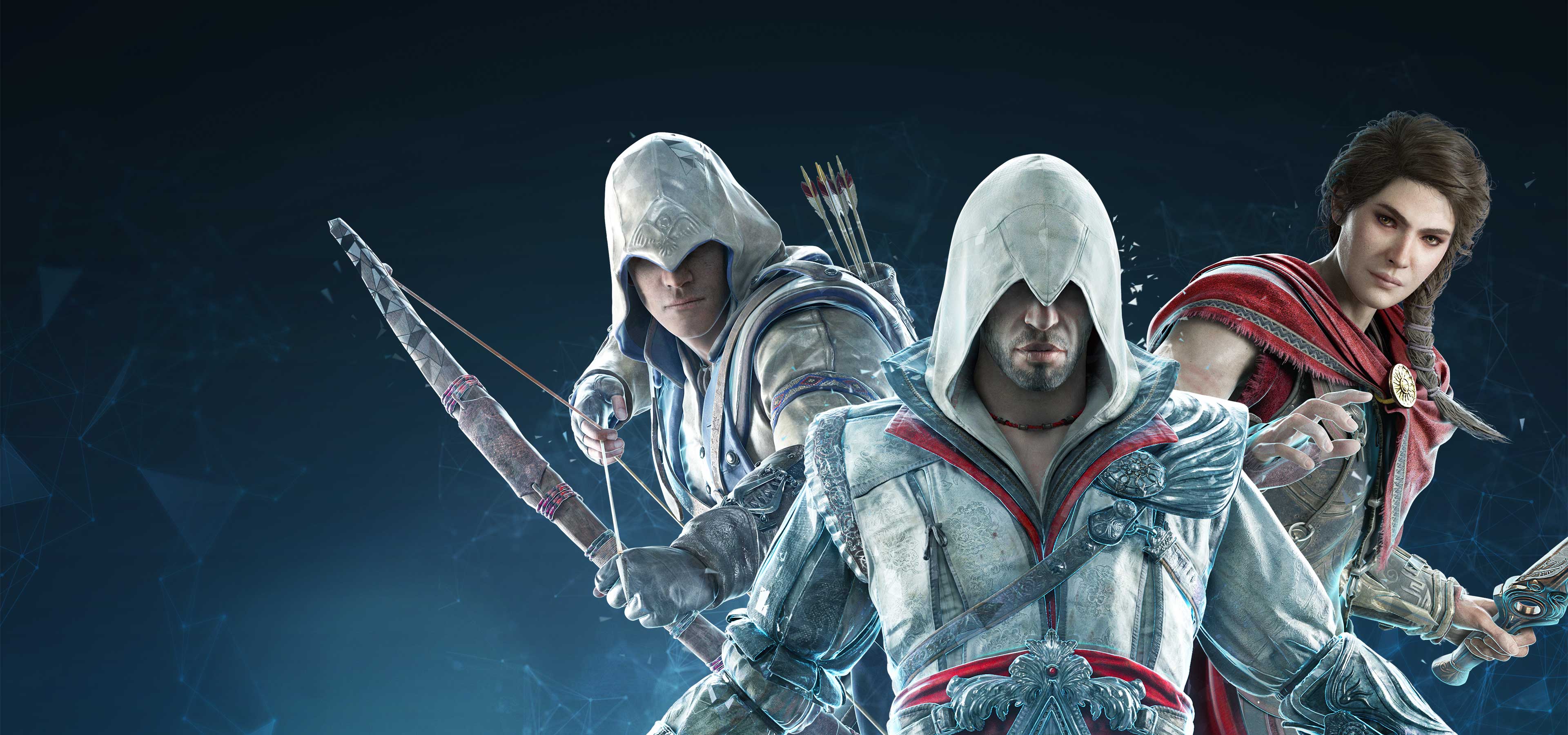
As you take on the role as an unknown hacker you enter virtual simulations of key historical events embodying Ezio Auditore (Renaissance Italy), Kassandra (Ancient Greece), and Connor Kenway (Colonial America in Boston and Newport), each with their own missions, weapons, and environments. The hacker’s mission is to recover fragments of an Isu machine’s code by reliving the protagonists’ memories—while secretly planting logic bombs to sabotage Abstergo’s1 plans.2
Assassin's Creed Nexus VR (ACNVR) is a welcome installment into the Assassin's Creed franchise. Despite releasing on limited specification hardware (Quest 2, Quest Pro, and Quest3), ACNVR is often cited as a "AAA" release for the VR platform that typically lacks high budget, high production games when compared to XBOX, Playstation, Nintendo, and PC releases. Nearly three years in, is the game worth playing today?
PREFACE
The Assassin's Creed games are well celebrated and I am familiar with the games' lore even though I have never played them. This gave me a fresh set of eyes to experience Assassin's Creed without having to compare it to previous games in the installment and not have them influence my play through of ACNVR. The review is based on ACNVR being a standalone IP.3
For those who have never experienced virtual reality gaming, it's very difficult to describe how immersive games can be. Suspending disbelief is NOT that difficult because rather than peering a fictional world on a television, you are immersed in it and you feel like the environment is all around you. Therefore, the experience can be quite intense during play through. In VR games, standing high up on a ledge can give you the actual sensation of vertigo, even though you are actually in your own living room. Since ACNVR contains a stealth parkour mechanic, you will feel these sensations of height and distance without real risk of falling from those heights.
PRESENTATION
When you first boot the game, you are greeted with a futuristic user interface(UI) and moody futuristic music score. Like most games at the outset, they introduce the plot and game mechanics. You are introduced to Dominika Wilk (Morena Baccarin) who provides the upcoming missions, along with Rebecca Crane (Eliza Jane Shneider) and Shaun Hasting (Danny Wallace), who reprized their role in the series4. The early part of the tutorial is to get the player familiarized with the different virtual environments that include the Animus, the augmented reality interface, and the historical simulations.
When beginning the first mission in the simulation, as Ezio, you are at the entrance of Monteriggioni, Italy. Upon entering, you are introduced to a bustling city and greeted to the first set of missions. While you are not really interacting much with the inhabitants (npc) of the city, the sheer abundance of them, add to the immersion. Even though the interactions are limited and a lot of the same 3D models are used for a lot of the npc characters, you can encounter them participating in activities that unravels the context of the storyline both in what they are doing and with their dialogue. The overly populated locales make the simulated sessions feel "lived in" and certain moments play an integral part of some missions moving the story forward.
GRAPHICS
If you are a long-time gamer, more specifically VR gamer, you probably wondering how Red Storm was able to achieve having so many non-playable characters (npc) on screen at once considering this is a huge technical achievement running on limited hardware for a standalone virtual reality headset such as the Quest 2/3. Rather than go into detail about how they achieved it, that would be out of the scope of this review, the review is focused more on how this technical achievement enhances the experience of playing the game. Whether the player is high atop the buildings scoping an area or in the streets, walking through the dense crowds, the player feels more immersed from having populated cities.
ACNVR is a beautiful game. Not only does it achieve the aforementioned technical feat of having a lot of things happening on screen with npc's, ACNVR captures the embodiment of the time periods it simulates, with accurate environments and character design doing so with only some minor hiccups to performance, where you never feel distracted by these abrupt moments of lag and occasional framerate issues. This becomes apparent when you first get the opportunity to explore the environment on the first mission through Monteriggioni, Italy and throughout the rest of the game.
Noteworthy graphical touches are the transitions from the virtual space (when you are receiving your briefings), to your actual room (augmented reality), to the simulated historical time periods, and even transitioning into the menu user interface are just SO COOL . A lot of attention and care went into being able to distinguish different layers of the story with these transitions, where they feel intentional and never feel out of place. Since the environment in the game IS a virtual environment, going through the menu is also part of the game's storyline contrary to most games where the menu is a (tacked on) necessary user interface to manage inventory, stats, etc. This concept could just be exclusive to augmented/virtual reality because the interactions are more immersive, however, these transitions are executed so well they could be dismissed only for being great art/design and be overlooked for how well it completes the narrative the game tells.
AUDIO
SOUND
The overall quality of the ambient sounds and sound fx were good. They matched the environments and time periods along with having a variety of sound samples for just about everything you can think of. From birds cuing, to swords clashing, to echoes in a large chamber, you feel like you are there.
The voice overs from the main characters and npc's alike enhance the sound further. The voice acting in ACNVR is top notch especially with all the characters that are part of the main narrative. Whether you are eavesdropping on a conversation that drive the main story or even passing by npc's discussing some topic, there is no shortage of quality dialogue. I should also make note that this variety of dialogue acts as somewhat of unofficial missions that the player can undertake to unravel the story, further enhancing historical context and story queues.
My only small criticisms would have to be with some areas sounding more crowded than they actually are and some areas had too much nature sounds like trees rustling or animals scurrying without them being there. This part of the ambient audio makes it so that it doesn't sound layered and three dimensional. However, I should also remind people because of how immersive VR is, noticing these types of nuances are much easier to detect when compared to playing a game that's being projected from a television. More so, I'm probably just nitpicking.
MUSIC
The music makes you feel like you are in a movie. The compositions blend classical and futuristic scapes. The music changes depending on missions, being detected by enemies, and will crescendo at key story segments. There are tunes that repeat from level to level. Some npc's in the game also play tunes analogous to the time period and they do repeat in different areas within the same environment similar to what you would find with the same npc's 3d models being used. Despite the number of song limitations in the game, they always fit the mood and situation. On top of that, the high quality composition easily invites the player to enjoy the cinematic experience that the player is a part of.
I particularly liked the "hasty-playful" music during the parkour challenges that fit well for having a sense of urgency but not tension since these are timed challenges that don't progress the narrative. If you are familiar with musical scores for Pirates of the Caribbean, it reminds me of that. The parkour challenges add a welcome departure and variety to the game. And if you happen to fail the parkour challenge, restarting it is fast and the music smoothly re-loops. I believe that the song they created for the parkour challenge is the reason why I did at least one of these challenges at every level .
GENRE
Assassin's Creed Nexus VR is a single-player, first-person perspective, narrative-driven, stealth action-adventure game (That was a mouthful!). The game contains light puzzle-solving, encourages parkour, and stealth over combat. The game makes great use of augmented/virtual reality for interacting with the environment fitting with the storyline itself.
GAMEPLAY
You progress through ACNVR in a linear narrative manner. Each environment that you play through is a large sandbox with different waypoints. The main narrative is always clearly marked to progress the story where you, as the player, decide when and how to get there. The developers did a great job of intentionally making the environment traversable in many different ways. You can digress to the other waypoints to collect artifacts, complete parkour challenges, and even learn more about the real history of the events in the game, albeit, within the constraints of each mission's physical boundaries and segments of the main mission that can sometimes lock an area to progress the story. Luckily, after completing a level, you can always go back to these levels and collect any missing side missions you previously didn't acquire.
Most of ACNVR gameplay consists of reaching a waypoint or doing a fetch quest. While this might be an oversimplification of the gameplay loop, the variety of how these are accomplished with the robust narrative and stealth element of the game adds to the overall experience. While not overly difficult, carrying on stealth missions were extremely fun and participating in the storyline and watch it unfold around you was a blast to unravel. Blending into crowds, using distractions, climbing buildings to escape enemy attacks, and performing air feats are just some of the many mechanics that made traversing environments enjoyable even though the game is linear. Missions that included blending with the crowd is a particular favorite of mine.
I played the game on normal because I did not know how forgiving stealth was going to be. A few hours into my play through, I realized I probably should have started the game with difficulty at the highest setting. The game is very forgiving with the stealth mechanic and taking damage. Recovering from damage only requires a cool down and falling from high above only deals some damage. The enemies are easy to evade and not too difficult to eliminate. I would compare the stealth difficulty to the first installment of Metal Gear Solid5 for the original Playstation. I would even say the combat segments, especially when you have to do them, were still quite easy. To be frank, I preferred the difficulty being the way it is considering that the storyline remained the main focus of the game. If the game were more difficult and a grind, it would deter and distract players from the overall experience of engaging the player into the narrative. If the player desires to do the other challenges, they can veer off and do them. With that being said, ACNVR is a narratively-driven experience that let's you, the player, get immersed in the story and they accomplish that by limiting the difficulty.
ACNVR contains melee and shooting combat but the main focus is parkour and stealth. In certain segments of the game, you will have to eliminate enemies before you can progress. The game provides several different combat mechanics for dodging, blocking, and attacking that provides openings to the enemy npc's. Different enemies have varying amount of hit points. Dispatching an enemy is easy. The combat is not very deep, as I eluded to earlier, since the game focuses on progressing the narrative, with the intended ability for stealth and stealth kills (My favorite missions included "blending in" with the crowd to remain undetected by enemy npc. While not incredibly deep, I purposefully would get detected just so I can do the missions over again.).
The game has a lot of replay value. After completing a level, the player can return to them to complete challenges or redo segments. There are a number of different challenges and segments that can be approached differently. Can you complete areas without being detected or do them without eliminating enemies? Some of the challenges are built into the gameplay while others you can create for yourself. Although, I would like to go into more detail about some of the challenges, it's worth it to discover the different varieties the game provides on your own. I completed ACNVR in about 15 hours. However, a player can expect upwards of 30+ hours of gameplay if the player decides to do the other challenges.
CONTROLS
Learning the controls for ACNVR is easy because it is a first-person perspective VR game where the player mimics the real life motions in the virtual space. Swinging a sword is like swinging a sword in real life; reaching for a ledge to climb is like reaching for a ledge to climb in real life. Where the controls can be frustrating is the responsiveness of them when performing an action, more specifically in the climbing and parkour mechanics. To be honest, it makes sense that sometimes you are unable to grab an edge for climbing or perform parkour since these real life counterparts of these activities are extremely difficult; my gut tells me this was intentional by the devs. I swore out loud a few times during my play through because a fell to my doom doing these in the game but a part of me realizes that this would happen in real life. Doing them for real would have more devastating consequences since the real life counterparts are far more challenging than the ones simulated in VR. I should know because I became belayed certified years ago, so I am familiar with climbing and it's not easy! I would argue that players should accept this as a feature and not a bug. There are moments of jank but so few and far between, it won't hinder progress, but cause outbursts of frustration every now and then.
COMFORT
You should also take into consideration that virtual reality despite its immersive capabilities, can cause an intense level of discomfort for some people. Each person's sensitivity varies and you should be mindful of discomfort and knowing went to take a break or stop all together. This game is specifically designed for "hardcore" VR gamers even though it has many comfort options to satisfy the varying degrees of comfort someone can experience.
TECHNICAL
ACNVR only has a few issues that I've encountered during my play through. The most obvious, that I did not find bothersome, were the intermittent framerate drops or lag that occurs throughout the game typically when a lot of things are going on. These occurrances only happen for a moment. The game did freeze on me once. Other than those, the game runs great on the Quest 3.
CONCLUSION
Assassin's Creed Nexus VR6 is a high quality, single-player, first-person perspective, narrative-driven, stealth action-adventure game (That was a mouthful!) that Assassin's Creed fans and newcomers alike are going to enjoy, albeit can be uncomfortable for some players because of the virtual motion you experience when playing. Luckily, the settings can be adjusted for different comfort levels. Players can enjoy 15 to 30+ hours of gameplay with the ability to go back and do challenges that you missed. These range from skill challenges to unraveling real historical content and narrative context. At times, the controls can be unresponsive or maybe you experience some performance issues, yet these small issues never take away from the experience itself. Assassin's Creed Nexus VR is a high production value single-player experience that is so commonly scarce in the VR industry. I undoubtedly recommend including Assassin's Creed Nexus VR to your game library.
- PRESENTATION: 10 👍👍👍👍👍👍👍👍👍👍
- highly immersive
- great mix of content
- awesome acting
- GRAPHICS: 9.5 👍👍👍👍👍👍👍👍👍
- tons of npcs
- great visual detail
- great draw distance
- SOUND: 9 👍👍👍👍👍👍👍👍👍👍
- great composition
- well-timed audio
- great sound fx
- awesome voice actors
- COMFORT: 😎|🤮
- super immersive
- may not be suitable for players sensitive to VR
- CONTROLS: 9 👍👍👍👍👍👍👍👍👍👍
- occasional jank, mixed responsiveness
- GAMEPLAY: 10 👍👍👍👍👍👍👍👍👍👍
- 15-30+ hours of gameplay
- amazing narrative
- large variety of optional challenges
REFERENCES
-
Portions of the summary provided by AI (summary from gamerant.com). ↩ ↩2
-
Here is another game I played: Review: Warhammer 40K: SpaceMarines ↩
-
Metal Gear Solid is one of the most celebrated stealth games of it's time. ↩


Comments
Post a Comment