GAMING: The Industry changed...
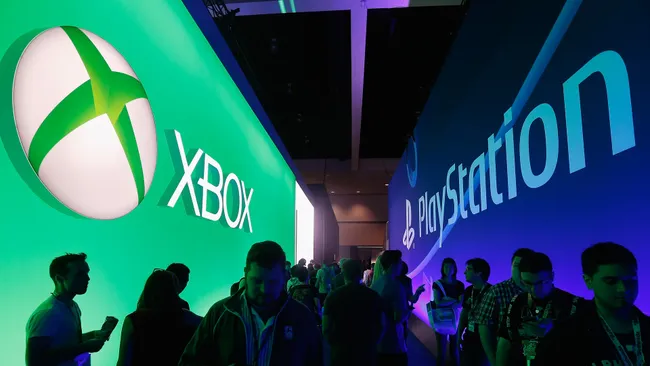 Image from Windows Central1.
PREFACE
The gaming industry changed...
Despite entertainment, more specifically video games, being part of discretionary spending, it is an important aspect of survival, through recreation, for a way for someone to enjoy his/her life. Recreation provides a necessary break from the mundane and even provides healthy ways to engage brain and physical activity. Even though recreation may not be categorized as a "necessity" when compared to food and shelter, it can't be denied how important entertainment is for healthy human development.
The most recent announcements from Microsoft XBOX and Sony Playstation created a firestorm of intense criticism from gamers. As gamers feel they are being squeezed more and more as time passes.
In this installment, we go into the 'why' these companies are going in this direction and potential ways to keep enjoying gaming.
ATTENTION MARKET
The gaming industry is part of the attention market. The market includes television, social media, gaming, radio, books, sports, etc. These are all forms of recreation. Social media consumes a large chunk of that, essentially, in many cases replacing all the other ones. We don't need to name any of them because we are already aware of what those are.
To better understand the attention market as a form of recreation, we can best categorize recreation in two forms: passive and active. Passive is engagement through mostly consuming and taking in content. Active is engagement through participating in the process where some feedback is directly correlated to inputs from the person engaging in the activity.
To clarify there is no pure form of active and passive engagement in many situations. However, an activity that leans more to active or passive engagement provides valuable insights on what type of recreation someone decides to engage in. More often than not engaging in a passive experience requires less effort than actively participating in it. A prime example is fighting in an mixed martial arts (MMA) bout, where real mental and physical harm can occur, as opposed to watching an Ultimate Fighting Championship (UFC) fight on television.
FRICTION
Friction is also a big component of the attention market. Friction can best be described as time and difficulty to engage in an activity. These can be perceived as barriers that can restrict someone in some way. Having enough friction can deter someone from an activity. Having less friction can more often than not, allows easier engagement.
In the same way that friction can detract attention, friction can sometimes be used as a way to attract engagement. This is the dichotomy of using friction and how it straddles both to attract and repel. The table helps better illustrate some examples of what friction is:
| TYPES OF FRICTION | DETRACT ATTENTION | ATTRACTS ATTENTION | EXAMPLES |
|---|---|---|---|
| Time | People become impatient. | Leave people in suspense. | GTA 6 Game Release. |
| High Price | Too costly for purchase. | Perceived value. | DeBeers Diamonds |
| Scarcity | No desire to have. | Desire to have something that is rare. | Lububu |
| Progress through hardship | Too difficult or too much effort to engage in. | The feeling of accomplishment | Playing tennis |
| Brand loyalty | Don't want to switch from what is familiar. | Brand is stale. |
COMPETITION
Not only do developers need to design around minimizing friction in the "noisy" over saturated gaming industry, and it is just that, over saturated with excessive competition. The barriers of entry to making games now, don't exist like they used to because many of the tools are now accessible to anyone with little to no costs (AI being one of them), on top developers having many gaming platforms where they can publish to, if they so desire.
Large studios (AAA)2 with inflated budgets and long development cycles, typically years out, can be encumbered by its own size. These studios live and die whether the release is successful or not. The factors that play a big role for these game releases are the changing customer preference and the developers interpretation of what customers want. Preferences change over time and if the customers and developers are not in alignment, well, the results are often quite devastating when a game releases. Some examples include Marathon and Concord.
There are emerging studios developing experiences more often than not with less resources and with quality that rivals the AAA studios. "Emerging studios" is misnomer because these studios have existed for a while but have been slightly invisible to the general public. Many of these developers originated from the gotcha3 games and transitioned into AAA development, where some games continue to use the formula of gotcha games. HoyoVerse that developed "Genshin Impact", "Honkai: Star Rail" and "Zenless Zone Zero" are all free to play games with the gotcha system to generate revenue. Pearl Abyss, originally a gotcha game developer, broke into the AAA game market with their successful release of "Crimson Desert" that is NOT a gotcha game. There are a number of games from these types of studios releasing many anticipated "AAA" games this year.
Needless to say, the competition is fierce. Unless these games are exclusive to any particular platform, where in many cases, these games are released on all of them, unless someone is tied deeply to any particular IP that only releases on one platform, more often than not, gamers are going to flock to the platform that treats them best. That becomes a large problem for platforms like XBOX and PLAYSTATION, especially if customers have multiple platforms that they can choose from. In many instances, in this regard, Valve's Steam wins overwhelmingly considering that Valve has built a reputation for being pro-customer contrary to customers' interpretation of where XBOX and PLAYSTATION seem to be going4.
GAMING RIGHT NOW
The gaming industry has been contracting for a long time. Consumer taste continues to change on top of having an abundance of choices to fulfill that desire to play games, let alone engage in other activities that draw a person's attention. The ripple effect of the changes in the gaming industry reveals a bifurcation of strategies.
For the big players such as Microsoft XBOX and Sony Playstation, their direction has not been well received from the gaming community, at least on social media. XBOX imposed monthly time restrictions on streaming game pass with as low as 5 hours a month for $10 and $23/mo for 15 hours a month5. Sony announced the reduction of physical disks6 and removing purchased videos from user libraries7 are just a few of the gripes people have with Sony. Regardless of preference, these sorts of situations have garnered quite a lot of attention. Time itself will be a determinant whether or not customers will eventually leave these platforms.
The XBOX and Playstation situation is in stark contrast to the other big players, Valve's Steam and Epic Games. The Steam platform has experienced record usage and Epic Games seems to be following the same route as Steam by going with a more open ecosystem8. Whether or not gamers decide on having an exodus from consoles such as XBOX and Playstation, the fact remains, choices are available to the gamer, at the expense of changing to a different platform and that involves quite a bit of investment now a days.
Gaming is an active recreation. In many cases the barrier of entry is often associated with the costs to engage in the activity itself. It is the single largest form of friction for anyone to get involved with it in the first place because you need a device just to participate. With hardware costs being the way it is, this leaves out a number of potential gamers who essentially flock to the readily available platforms on the most ubiquitous devices, the cell phone. Keep in mind that Valve and Epic have strategies to compete in this space8 and in some regards already dipping their toes in it.
BROAD VIEW
This is a much broader discussion about the state of society as a whole and to be honest, it is a topic that is far too large to be in one blog post. However, it goes without saying that a number of industries are going in different directions in an effort to generate revenue.
On the one hand, companies are attempting to acquire revenue from the existing customer base by limiting their service entirely and adding other fees on top of them. On the other, the approach is more about getting involved with an open ecosystem8. One generates more revenue immediately, the other, potentially gets revenue over time at the expense of not generating immediate revenue .
If Steam's approach is an indicator of the latter, than we should anticipate that the open ecosystem model will win over customers in due time. In much broader context this attract people to open ecosystems like Linux that has been continuously experiencing more users, where being free and open source is no longer associated with lesser quality. In most situations, the open ecosystems, have matured quite dramatically that they are no longer hindered by the perception of being incomplete. As markets change, more and more people will discover the benefits of open ecosystems. If the backlash towards Microsoft XBOX and Sony Playstation is real, then we can anticipate more and more people will jump into Linux, Steam, Epic Games, etc.
Should you migrate away from Microsoft XBOX or Sony Playstation? There is no right or wrong answer. The only available correct answer is the one that is right for you.
Just in case that you decide to jump into the open ecosystems, here are some ideas:
OPERATING SYSTEM Great for Gaming
- Steam OS9
- Pop!_Os
- Garuda
- Cachy OS
GAME PLATFORMS
GAME LAUNCHER11
- Lutris
- Heroic Games
VERSIONS
2026v.0.1.0: init12
REFERENCES
-
Image A new survey shows the scale of Xbox's fall vs Playstation and Nintendo in the U.S.- and the scale of opportunity ↩
-
These studios are typically labeled as triple 'A' or "AAA" for reputation and production quality. ↩
-
"Gotcha" games are free to play but often require a paywall to either progress through the game or acquire digital assets. ↩
-
Sony announcing a reduction of producing game discs received huge backlash. The interesting part about Valve's Steam versus the other gaming platform is that the games are digital downloads. Valve does NOT receive (or is nonexistent) the same backlash as Sony. This is a well-known phenomenon. When interpreting this, take into consideration that Gabe Newell, the CEO of Valve, is an actual gamer and as a gamer has more insight about what gamers want because he has obvious immersed market research with the industry he is in. This is not a criticism of newcomers to any industry but does suggest someone in an industry that does the thing in that industry as a hobby, possesses some level of expertise beyond the conventional ideas about understanding a topic. ↩
-
ArsTechnica: Xbox imposes harsh new limites Game Pass game streaming ↩
-
Tech4Gamers: Playstation's Latest State of Play Swarmed With "No Disc, No Buy" Comments ↩
-
MSN: Sony removes hundreds of purchased Playstation Store movies from customer libraries ↩
-
The Correct and Complete Way to Install Itch.io game launcher on Linux ↩
-
This can be a little confusing. Some gaming platforms like Steam and Epic Games are also game launchers. In this instance, I am merely describing launchers that you need to attach a game platform to in order to play games from those services that may not be compatible on that operating system. Game launchers can often act as a "bridge" to your game library that would otherwise not be able to run on an operating system, such as Linux or MacOs. They contain compatibility software layers so games can run on the operating system you are on. This is very common on Linux. ↩
-
blog.avrstory.net's development release page. ↩


Comments
Post a Comment